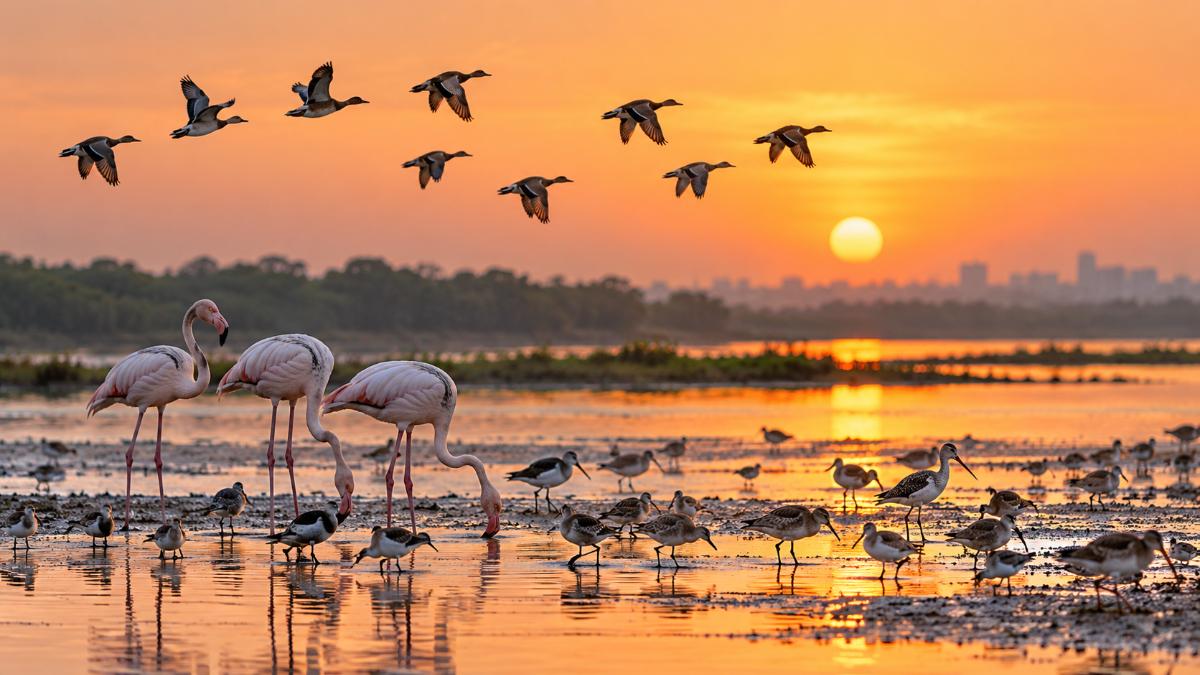

Every year, as birds begin moving south from their breeding grounds, the coastal wetlands around Muttukadu, Nemmeli and Kovalam become important stopping and feeding grounds. This year, the first large gatherings are already being recorded, signalling the beginning of another remarkable migration season along Chennai’s coast.
For birdwatchers, photographers and nature enthusiasts, the arrival of migratory birds is one of the most anticipated events of the year. The quiet backwaters, mudflats and salt-pan habitats can suddenly become busy with waders, shorebirds, ducks and other waterbirds that have travelled thousands of kilometres.
Recent monitoring has recorded thousands of birds in the Muttukadu–Nemmeli area, with numbers expected to increase as the season progresses.
A seasonal transformation along Chennai’s coast
The Muttukadu–Nemmeli region may look like an ordinary stretch of coastal landscape to a passing traveller, but its wetlands support a surprisingly diverse bird community.
The Muttukadu backwaters contain a mixture of tidal mudflats, shallow water, sandbars, mangroves, water edges and other small habitats. The exchange of seawater and freshwater helps create different ecological conditions across the wetland, providing feeding opportunities for birds with very different requirements.
A detailed bird survey conducted between 2021 and 2023 recorded 124 bird species from 45 families and 19 orders in the Muttukadu backwaters. Researchers found that the area supports both resident birds and seasonal migrants, with shorebirds making extensive use of tidal mudflats, shallow waters, sandbars and intertidal areas.
The area is therefore not simply a place where birds happen to gather during winter. It is part of a larger coastal ecosystem that provides food and shelter at different stages of their annual cycle.
Thousands of birds begin arriving
The latest observations from the Muttukadu–Nemmeli estuary show how quickly the migration season can build.
Monitoring reported 5,568 waders and shorebirds by September 30, including more than 1,000 Little Stints, around 430 Greater Flamingos and approximately 890 Garganeys. The count does not include several resident species, meaning the total number of birds using the area can be considerably higher.
Among the early arrivals are different species of sandpipers and other shorebirds, including Common Greenshanks and Ruddy Turnstones.
The numbers are expected to change throughout the season as additional migrants arrive and birds move between different wetlands along the coast.
This seasonal movement is not limited to Muttukadu. The wetlands along the East Coast Road, including areas around Nemmeli, Kovalam and Kelambakkam, form part of a wider network used by migratory birds. Some birds may use these coastal wetlands as an initial stopping point before moving towards other wetland habitats around Chennai.
A stopover on a much longer journey
For many of these birds, Muttukadu is only one part of a much larger journey.
Migratory waterbirds arriving in southern India may have travelled from breeding grounds far to the north. The birds use a network of wetlands along their route, stopping at suitable locations to rest and feed before continuing their journey.
The Muttukadu backwaters form part of the Central Asian Flyway, one of the major migration routes used by birds moving between breeding and non-breeding areas across Asia.
For a small shorebird weighing only a few tens of grams, travelling thousands of kilometres is an extraordinary feat. During migration, the availability of suitable wetlands can determine whether a bird has enough energy to continue its journey.
This is why even relatively small wetlands can have importance far beyond their geographical size.
The mudflats are a feeding ground
One of the most important features of Muttukadu is its tidal mudflat habitat.
When the tide recedes, areas of mud and shallow water become exposed. These areas contain small organisms and organic material that provide food for shorebirds.
Recent research at Muttukadu has examined the relationship between small-bodied shorebirds and intertidal biofilm, a thin layer containing microorganisms and organic matter on the surface of tidal sediments. The study followed shorebirds and their food resources across multiple migration seasons and found seasonal changes in both bird abundance and the characteristics of the biofilm.
This reveals an important part of the migration story.
What appears to be an empty stretch of wet mud may actually be a highly productive feeding habitat.
The birds are not simply resting there. They are using an entire food chain supported by the wetland.
Why tides matter
The relationship between birds and the wetland changes with the tide.
At low tide, mudflats and shallow feeding areas become exposed, allowing many shorebirds to search for food. As the tide rises, those feeding areas disappear under water and birds may move to other parts of the wetland to feed, rest or gather.
Researchers studying Muttukadu have identified several different microhabitats used by birds, including tidal mudflats, intertidal zones, sandbars, shallow water, open water, mangroves, grassland and water edges.
This variety is one of the reasons the area can support such a large range of species.
A single wetland can effectively provide several different habitats within a relatively small area.
A remarkable variety of birds
The diversity recorded at Muttukadu extends well beyond the familiar large waterbirds.
The scientific survey documented species belonging to many different bird groups, including shorebirds, herons, gulls, terns, ducks, raptors, kingfishers and terrestrial birds.
Among the seasonal visitors recorded during the study were species such as Greater Flamingo, Northern Shoveler, Pacific Golden Plover, Lesser Sand Plover, Black-tailed Godwit, Curlew Sandpiper, Little Stint, Common Sandpiper, Greenshank, Marsh Sandpiper and several other migratory birds.
The same research also recorded several species of conservation concern, demonstrating that the importance of the wetland goes beyond simply having a large number of birds.
A separate study covering observations through early 2024 documented 126 bird species at Muttukadu and highlighted the area's importance for resident and migratory waterbirds, including near-threatened species.
The migration season is still developing
The first arrivals do not represent the final picture.
Bird migration is a dynamic process. Different species arrive at different times, and individual birds may use different wetlands depending on food availability, water levels and local conditions.
Research conducted at Muttukadu has broadly identified September to December as the migratory period, with species richness remaining high into the post-migratory months.
That means October can be an especially interesting time to visit.
As more birds arrive, mixed flocks can become larger and the variety of species may increase. The changing tides can also create different photographic opportunities throughout the day.
A paradise for bird photographers
For wildlife photographers, the Muttukadu–Nemmeli wetlands offer much more than opportunities for close-up portraits.
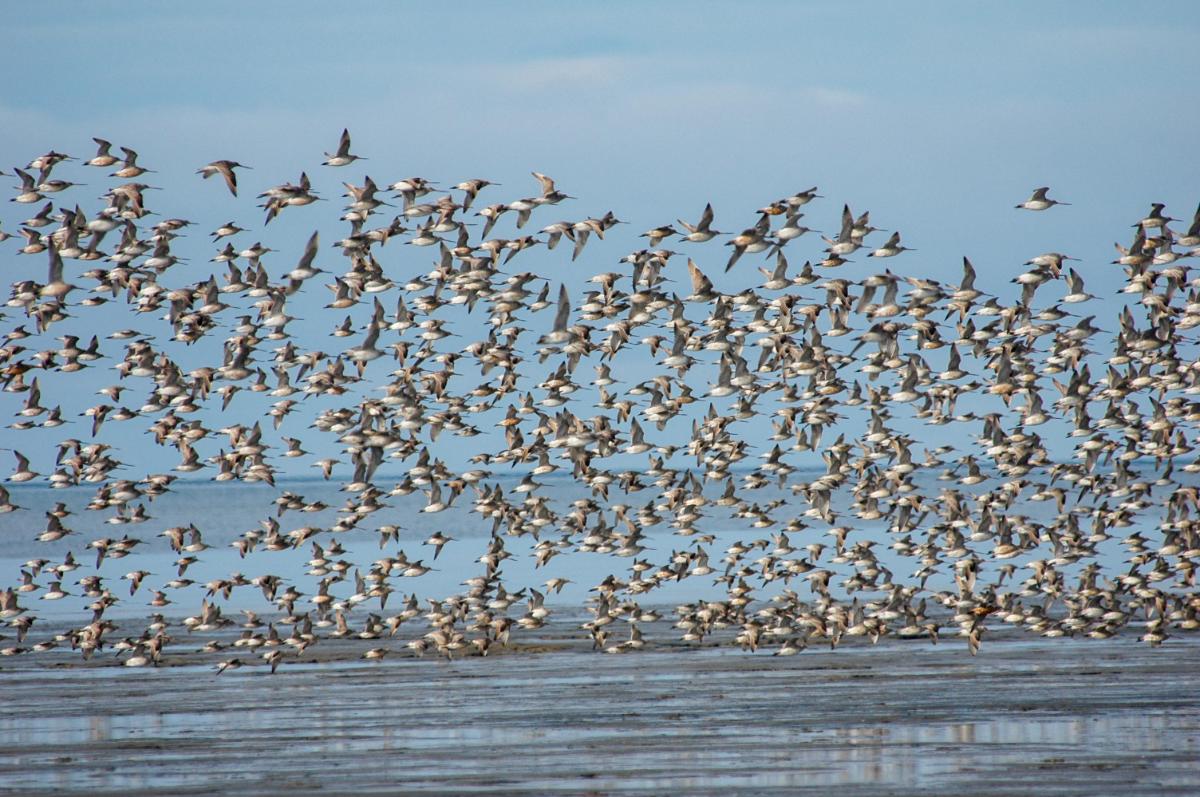
Large flocks can create dramatic patterns in the sky. Shorebirds feeding together can produce interesting behaviour and interactions. Flamingos, ducks and waders can create reflections in calm water, while changing morning and evening light can transform the appearance of the wetland.
But some of the most meaningful photographs may be those that include the habitat itself.
A photograph showing a small bird standing on an expansive mudflat can tell a larger story than a tightly cropped portrait. A flock taking flight above the backwaters can communicate the scale of migration. A feeding bird surrounded by tidal mud can show the relationship between the species and the ecosystem that supports it.
For photographers, patience is often more valuable than simply getting closer.
A wetland that needs protection
The arrival of thousands of birds also brings attention to the importance of protecting the habitats they depend upon.
Scientific studies have identified several pressures on the Muttukadu backwaters, including pollution, waste disposal, sewage, fishing-related activity and recreational disturbance. Boating and other human activities can also affect birds when they are feeding or resting.
For migratory birds, habitat quality matters throughout the season.
A wetland may appear healthy because birds are still present, but changes in water quality, tidal flow, food availability or disturbance can gradually reduce its value.
Protecting the birds therefore means protecting the wetland itself.
A season worth watching
The return of migratory birds to Muttukadu and Nemmeli is more than an annual birdwatching event.
It is a reminder that Chennai's coastal landscape is connected to ecosystems thousands of kilometres away.
A small shorebird arriving on a mudflat may have crossed several countries. A duck resting on the backwaters may be part of a migration that began far to the north. A flock of birds rising together over the estuary represents only one visible moment in a journey that takes place across an entire continent.
As October progresses, more migrants are expected to arrive and the wetlands are likely to become increasingly active.
For those who take the time to watch, the Muttukadu–Nemmeli landscape offers an opportunity to witness one of nature's most remarkable annual events — the return of migratory birds to the wetlands of Chennai.
And perhaps the most important lesson is this: when we protect a wetland close to home, we are also protecting a much larger migration story that connects continents, ecosystems and generations of birds.

💬 Comments (0)
Sign in to leave a comment
No comments yet. Be the first to share your thoughts!